In 1985, as an Agricultural Engineering junior at the University of Minnesota, I traded my academic textbooks for a summer internship that would fundamentally shape my approach to environmental consulting.
I had jumped at the opportunity for a "hands-on" role called Spray Field Monitor at the General Foods Birdseye frozen vegetable plant in Waseca, Minnesota. Eager to make a good impression, I drove 90 minutes out to the rural plant and showed up for my interview, overdressed in a formal suit and jacket. I quickly realized the interview was a mere formality; the plant managers simply trusted the university to send them a capable student to oversee their wastewater treatment during the intensive "green pea and corn season".

The Scale of the Operation
The logistics of the Birdseye operation were massive. The plant processed vegetables around the clock, locking in "freezing freshness" within 24 hours of harvest. But washing, cooking, and freezing these vegetables generated large volumes of organic-rich wastewater—far too much for the local municipal sewage plant to handle.
The plant had to manage this industrial waste independently.
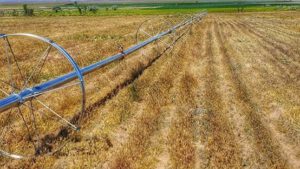
The water was piped to a large lagoon from which it was pumped and sprayed onto three large grassy fields using "wheel walks"—massive, motorized sprinkler axles that ran the width of the fields.
The entire waste disposal system relied on a delicate environmental balance:
-
-
- 80% of the water was taken up by the grass via natural transpiration.
- The organic matter was filtered by the topsoil and broken down by aerobic microbiological activity.
- A tile drainage system beneath the fields ensured proper drainage into a local ditch, eventually flowing into the Le Sueur River.
-
For this system to work safely, the soil could not become saturated. The wheel walks had to be moved every few hours.
High Stakes and Hands-On Engineering
My first day on the job involved rolling up my sleeves. I figured out the mechanics of a weir flow meter in the screen house, cleaning and calibrating the quieting basin and float apparatus to accurately record our critical flow rates.
I soon learned exactly why my role existed.
The consulting engineer responsible for the plant's EPA licensing pulled me aside. He explained that years prior, poor irrigation oversight had allowed saturated, polluted water to drain directly into the nearby river. The consequence? The EPA arrived with the county sheriff, who physically pulled the main power switch, shutting the entire plant down and costing the company dearly.
My job was to be the consulting engineer’s "eyes and ears" to ensure that never happened again. This wasn't just a theoretical threat. While taking routine water samples near our remote drainage outfalls, I started noticing unfamiliar, heavy-tread boot prints in the mud—prints that definitely didn't belong to our plant maintenance crew. It was clear: the EPA was conducting their own quiet, unannounced monitoring of our site. The pressure was on.
The Mystery in the Fields
I settled into my daily responsibilities: calibrating equipment, logging wastewater data, sampling and testing the water from monitoring wells and the drainage ditches for Dissolved Oxygen (DO), BOD, Chlorides and other parameters to ensure no anaerobic activity was occurring.
Everything was running perfectly.
Until one Monday, after a weekend shift, I tested the drainage water and measured a sudden, concerning drop in the D.O. levels. Something was wrong. I walked out to the fields, and the ground near the wheel walks was soaking wet.
The maintenance logs claimed the equipment had been moved on schedule. But as I looked closer at the numbered station markers in the mud, I realized exactly what had happened…
(End of Part 1. Check back next week for Part 2, where a plummeting D.O. level leads to an EPA stakeout, a milk-white river, and an upstream investigation.)